CHRIS COMBS' "BEESWAX/BITS": RECORDING TIME AND INFINITY

Chris Combs’ Beeswax/Bits faces towards the future: using a binary clock, the display of 32 glowing jars of beeswax transforms into a record of time, anxiously awaiting infinity.
Two years ago, I helped install Beeswax/Bits at Touchstone Gallery in Washington, D.C., for the exhibition Iteration Reiteration. As a relatively junior intern, it was easily the most unwieldy artwork I had ever been asked to handle: 32 cables to manage, 32 lights to arrange in the correct sequence.
One of the lights, third from the left on the bottom shelf, would not turn on for the entire duration of the month-long show: the light marked two years and six months. When Afterhours opened on August 31, it glowed proudly.
As a binary clock, Beeswax/Bits displays time in exponentially increasing intervals of seconds: the first light glows for one second, then goes dark for one second. The second light glows for two seconds, turning on when the first turns off. The third light glows for four seconds, and so forth. The first row of lights spans two minutes and eight seconds. The row below it spans nine hours and six minutes. The subsequent row accounts for 13 weeks and six days; the final light on the last row will not illuminate for 68 years and 14 weeks. Once it turns on, it will remain lit for that entire period, then shut off; a full cycle would amount to 136 years and 28 weeks.
Combs’ work implies continued existence; that somewhere, in 68 years or more, the shelves will still hang. Power will flow through all 32 cables, and hopefully, humans will witness its steady, pleasant rhythm into perpetuity. The materials Combs works with already honor long histories; next to Beeswax/Bits stands MacAffy’s Anti Viral Rejuvenator, an authentic vintage light meter made up to appear like a 19th century quack cure-all device. It poses as the kind of item peddled by genuine snake oil salesmen, native to a time when cocaine and heroin were mixed into elixirs offering to treat anything from insomnia to constipation to a cough.
The materials of Beeswax/Bits may hide their own legacies; the wood that comprises the shelves is salvaged, with nails already driven in. In the time before Beeswax/Bits was brought to life, these materials had already been used and discarded; Bits itself marks an interval of time in the continued existence of the wood.
As it stands, the future may often feel more tenuous: on September 3, the United Nations announced that global warming will surpass 1.5 degrees Celsius in a “strategic retreat”. Saudi Arabia has shut down its East-West crude oil pipeline, threatening roughly 4% of global oil supplies; oil prices now exceed $100 per barrel. The Super El Niño meteorological event, exacerbated by climate change, could trigger catastrophic drought to areas across the Southern Hemisphere, endangering millions as crops fail and wildfires wrack crucial carbon dioxide sequestration zones like the Amazon rainforest.
Even if Bits itself does not necessitate the kinds of global change that would halt or reverse this supposed collapse, it imagines a continued present, and at its slow, measured pace, calls upon us to cherish the moment we reside in and appreciate its temporality.
Chris Combs’ work is included in Afterhours at The Stamp Gallery of the University of Maryland, College Park, from August 31 to October 3, 2026. For more information on Comb’s work, visit https://chriscombs.net/. For more information on Afterhours and related events, visit https://stamp.umd.edu/visit/stamp_gallery.
This article is also available on the Stamp Gallery blog.
EVICTIONS AND LAWSUITS: GAY BAR RUSH IS NO MORE BUT LEGAL TURMOIL CONTINUES

On Wednesday, Aug. 19, RUSH Bar & Restaurant was evicted from its location on 14th and U streets NW following months of financial and legal turmoil.
Around 1 p.m., U.S. Marshals arrived promptly outside the business, which had already been vacated—RUSH stopped operations in February. The business owed more than $180,000 in unpaid rent and utilities; D.C. Superior Court records show the last payment was made in July of 2025, months before the bar opened on Dec. 5, 2025.
“It was inevitable,” RUSH owner Jackson Mosley tells City Paper. “The judgment was entered in July. I’ve had my period of time for me to be extremely sad about this, and it was extremely tough … but it’s two less keys on my key ring at this point.”
Mosley signed a lease on the 2001 14th St. property in May 2025. He says he entered into an unwritten agreement with the landlord that would permit RUSH to forgo paying rent until the business opened.
The abatement period lasted 90 days, according to Mosley, who says he was under the impression that rent costs accrued during that time would be spread out across the first few months of operation. “The landlord’s attorney came in … and made it seem as though from day 91 forward, we were supposed to be paying rent, and that was just not the case,” he says.
During the abatement period, the building was set to undergo thorough renovations. “We discovered we would have to strip [it] down and rebuild it,” says Mosley, noting he put around $300,000 into renovations—money that was originally planned to pay for rent.
“Me and my other two partners [who Mosley has chosen not to identify, but other outlets have named: Reza Malik and David Grogan] … had to drain most of our liquidity,” he says. “I stopped servicing the mortgages on my real estate with the idea that we just need to get to opening, so that the $2 million we had on our operating budget would kick in.”
This operating budget, says Mosley, came from an agreement with financiers who he cannot name due to an NDA. According to Mosley, “They said, ‘We don’t want to fund the build-out, but if you use your funds to build it, we will stabilize. We will provide the operating funds.’”
RUSH opened on Dec. 5. Ten days later, Mosley missed RUSH’s first payroll. He attributes the missed check to an error: “We had changed the name of the company from Green Zebra LLC to Rainbow Zebra LLC … it was a mismatch between the IRS records and what we were trying to put through with the payroll,” he says.
RUSH, according to several sources, offered a competitive salary for bar employees, as well as proposed health benefits. Mosley says the concept was community-focused, and the bar notably banned all tipping practices.
“It was a good idea,” says former employee Chris “Skipp” Williams. “We were building a community.” Williams says he was never paid for roughly a month’s worth of work and is still owed more than $5,000 in missed paychecks. He recalls many of the bar’s former employees were impacted. “People couldn’t eat—I was literally cooking meals for my co-workers,” says Williams.
Following December’s missed payroll, Mosley says he made an effort to provide partial pay to employees, placing the total amount distributed at about $23,000. But some employees, he says, displayed “immature behavior” regarding lack of pay (he claims one employee stole liquor from storage and encouraged others to follow suit) and were subsequently fired.
Williams maintains that he did not receive any of the $23,000 and was never formally terminated. “It took WUSA9 to ask [Mosley] specifically about me for him to give me a vague response where he kind of said I was fired … [but] I never received a termination letter,” says Williams.
According to Mosley, Williams was sent a letter of separation following a meeting where he attempted to retain Williams, offering to send him to bartending school.
“It’s such a complex, crazy Netflix-level of scandal,” says José Romero, better known as social media profile DC Homos. Romero began following the developments at RUSH on Dec. 17, 2025, the day the bar lost its liquor license. The cease and desist letter from the Alcoholic Beverage and Cannabis Board, which City Paper reviewed, states that the license was suspended because RUSH failed to pay its renewal.
Romero was waiting at RUSH when U.S. Marshals arrived to carry out the August eviction. Since December, Romero has tracked down numerous court filings against Mosley (captured on DC Homos’ Instagram), some of which went back eight years, he says.
On June 12, 2025, an arrest warrant was filed in Maryland against Mosley for a theft of $6,000. Mosley says he was never notified of the warrant, and that he exhausted numerous options to check whether his record was clean. D.C. law requires that all applicants submit a police clearance showing criminal record status in order to obtain a liquor license, and, according to Mosley, his background check went through without issue. “It would have existed in the National Crime Information Center, if someone was pursuing it, and it didn’t,” he says.
Applicants are also required to submit a Clean Hands certification verifying they don’t owe more than $1,000 in taxes, fees, or fines to the city. On Jan. 8, Advisory Neighborhood Commission 1B sent a letter to ABCA, which City Paper obtained, stating that “on December 8, the DOB issued a lien on this applicant’s [Mosley’s] property at 401 P Street NW for an amount of over $800.” The letter, however, erroneously claims a person can’t owe more than $100 (rather than $1,000) without invalidating a Clean Hands certification.
Regardless of the letter’s error, in early February, ABCA investigator LaKeta Coates found that RUSH’s Clean Hands certificate had been “fraudulently altered,” and that the business was not Clean Hands eligible, according to ABCA records. A May order from ABCA prohibits Mosley from filing a successive application at 2001 14th St. NW for five years.
“Her investigation proved nothing. I published a video of my tax portal, where my Clean Hands certificate was in that inbox,” Mosley says in response to Coates’ finding.
On Feb. 13, after meeting with Coates in person and providing copies of Notices of Non-Compliance for both himself and RUSH, Mosley was arrested on the Maryland warrant. He was given 30 days to turn himself in to the state’s authorities, which court records show he did on March 2. The following day, he was released on an unsecured personal bond of $5,000, according to Maryland court records.
On Feb. 19, Mosley filed a defamation suit against Romero, alleging that DC Homos’ coverage incurred a boycott that led to the business’ downfall, and asks for $1.18 million in damages, which Mosley states is the total sum invested into RUSH between “securing the lease, completing buildout, and acquiring furniture, fixtures, and equipment.”
Mosley’s defamation suit does acknowledge the Maryland warrant and reiterates his alleged efforts to check his records. “Upon later learning that a warrant had been issued, Plaintiff promptly addressed the matter through appropriate legal channels. The warrant was quashed and resolved prior to Defendant’s February 17, 2026, publications,” Mosley alleges in the suit, which also notes that on Feb. 17, Romero shared that Mosley was a “wanted fugitive.” The suit states, “at the time of publication, no active warrant existed” and accuses Romero of failing “to verify these statements before publication” and failing to correct said statements “after their falsity became apparent.”
On March 20, Romero appeared on Wait! Don’t Do It!, a podcast covering queer culture and District nightlife. “I had posted early on about the open pending warrant in Maryland, all I knew it was felony theft, that’s all it said,” Romero said on the show. “Maryland and D.C. have a deal where D.C. can arrest you for an open warrant in Maryland and ship you off.” The sound bite is now included as an exhibit in Mosley’s suit against Romero.
The Maryland charges against Mosley were dropped in March. A month later, Mosley filed for bankruptcy and listed 47 creditors, including Romero, according to bankruptcy court records. In spite of Mosley’s allegations that Romero owes him damages for defamation, Romero says, “if [Mosley] were to lose that [case], we would go after attorney’s fees for that.” Litigation is ongoing in Mosley’s case against Romero; in February, Romero filed an anti-SLAPP motion, which was dismissed and is currently in appeals.
One of the claims in Mosley’s bankruptcy case is to the IRS, to which, according to bankruptcy filings, he owes more than $250,000. Including rent, utilities, and late fees, he may owe more than $200,000 to the owners of 2001 14th St. NW, according to the lawsuit filed by the landlords in February.
Mosley says he has no plans to pay the staff he fired, even though D.C. law requires that companies pay employees their full pay within a day of termination, and an additional 10 percent of that paycheck for every day that passes without pay.
“They don’t deserve it,” he says. “Had they not overreacted and caused this big boycott, we would have recovered, and everyone would have gotten paid. That boycott killed us.”
As for the other employees who remained at RUSH and received only partial pay, he says, “The moment I have some sort of windfall … I will definitely distribute money to these people.”
This article is also available in Washington City Paper.
WE ATE AN APPLE IN MALCOLM X PARK

In mid-July, flyers started popping up on telephone poles across the city. “Eat an apple with me,” they read, with the time and place set for Malcolm X Park, Aug. 15, from 2 to 2:05 p.m, along with a QR code that linked to a Partiful RSVP page.
The flyer’s creator, Carl Endrulat, 30, tells City Paper he wasn’t anticipating more than 3,000 RSVPs. But on Saturday, at around 1:45 p.m., throngs of excited would-be apple eaters—roughly 1,000 people—descended on the park’s reflecting pool.
“We were expecting maybe 20 or 30, basically just some of our friends,” Endrulat says. “And then it blew up into a D.C. community event, which is awesome.”
Endrulat’s passion for apples originated from a desire to escape social expectations. His sparse Instagram page is exclusively photos of him biting into the fruit in front of various vistas and landmarks. “Every selfie I took looked horrible, and I kind of hated it. I figured I’ll take [a] photo eating the apple, and it looks silly, and that completely deviates the expectation that a photo needs to look good,” he says.
To Endrulat, this pressure to perform for others could explain the event’s popularity. “Because of the nature of D.C., there’s a lot of fear of judgment,” he says. “D.C. is such a work-oriented city.”
Even for a software engineer like himself, “the differentiation between [work] and social hangout time is mixed.” The apple-themed gathering, by contrast, presents an entirely judgment-free zone. “A lot of people [are seeking] community,” he says, “so just come hang out, don’t be serious.”
Attendees echoed his thoughts about the value of community. “There’s not that many easily accessible community events,” says Caleb Ruby, 24. As a paralegal, Ruby found the low time commitment accommodating to his schedule. “It’s literally a five-minute event,” he adds. Having found out about the gathering “like an hour” before it started, he notes that it was an easy opportunity he didn’t want to pass up.
For Ari Amaya, 28, the event wasn’t an escape from work, but unemployment. “If I didn’t have this event, I’d be at home with my cats, not really doing anything,” they said. “In such hard times right now, with the economy and everything, it’s hard to find things that are simple and free.”
Though Amaya has been out of work for less than a month, they’re one of the nearly 7 million people in America currently facing unemployment. D.C. boasts the highest unemployment rate in the country at 6 percent, about two percentage points higher than the national average of 4.1 percent. While it may seem like a small disparity, the D.C. job market has faced massive turmoil since the beginning of the second Trump administration; numbers vary but DOGE has cut between 300,000 and 400,000 federal jobs since January 2025—including approximately 100,000 in the DMV.
Around 2 p.m., amid chants of “apple, apple,” Endrulat took his first bite. Around him, people snacked on Fuji, Gala, Granny Smith, and Honeycrisp varieties, as well as pies and tarts. Endrulat professed his personal favor for Pink Lady apples, also called Cripps Pink.
The event was entirely BYOA, despite the original flyer’s promise of free apples for all. As the number of sign-ons ballooned, the Partiful page was eventually updated to say that attendees were expected to provide their own.
The crowd slowly began to move to the nearby Crush Dance Bar on 14th Street NW, where Endrulat had opened a $500 tab. “We told people, hey, there’s going to be a party at Crush. People want to follow the community, so the community went,” he says.
This article is also available in Washington City Paper.
REVIEW: MILITARIE GUN - GOD SAVE THE GUN (DELUXE)
2025’s God Save The Gun was Militarie Gun’s triumph. A pyrrhic victory, maybe; a sweet, hook-filled rock record about surviving the absolute low. Across 14 tracks, singer Ian Shelton croons about fucking up over and over again in his distinct gruff tenor.
Nearly a year later, the band returns with three new songs on God Save The Gun (Deluxe), the sour-sweet chaser to 2025’s shot.
The first of the new tracks, “3AM”, is a somber call into the void. In line with the lyric’s meditations on isolation – “How long I waited and stayed inside,” groans Shelton – the song unfurls into a large, open emptiness. Beginning with sparkly guitar and Shelton’s close singing, every breath audible, “3AM” slowly introduces warm strings and a big reverberating clap on the third beat. It’s gentle and centering, over in little more than a minute, but provides a quell of anticipation leading into the proceeding songs.
Second entry “I’ve Said Too Much” immediately converts the building potential of “3AM” into kinetic energy, opening with a crunchy, flickering guitar riff that chases the listener around like a bee for most of the track’s duration. However, it drops all of the emotional tension of “3AM” nearly immediately. Its loping midtempo beat varies little over the course of the song’s short, two-and-a-half minute runtime, and the repetitive hook echoing the title fails to actually say much of anything, in spite of the song’s themes. The final refrain of “I don’t run my mouth / ‘cause my mouth runs me,” is a sweet earworm, though.
Closer “World’s Always Burning” featuring Mannequin Pussy is easily the standout. Militarie Gun have mastered the depressing lyrics/upbeat sound combination, making the threat of apocalypse feel like a genuine reason to dance. At the end of the anthemic chorus, Shelton announces “I can feel it now / I think that we deserve it,” a shockingly bleak sentiment for a sound this uplifting. It’s reminiscent of a distinctly 90’s perspective on the end of the world, and not just because of the band’s obvious inspiration from nostalgic rock acts like Oasis. Sitting somewhere between the “Where Is My Mind?” needle drop at the end of Fight Club with skyscrapers toppling to the ground and the forever-meme that is Smash Mouth’s All Star, the concept that total oblivion could be something freeing feels anachronistic in an age when the effects of climate change and anxieties about an AI singularity loom heavy in the public consciousness.
Missy Dabice of Mannequin Pussy contributes a welcome second verse to the song, even if her softer vocals stand out against Shelton’s more harsh delivery. Their unique timbres play off each other beautifully, in fact, and she may actually be underutilized, as the final chorus provides ample unused room for her to return.
In all, God Save The Gun (Deluxe) builds off of Militarie Gun’s established repertoire for an easily enjoyable handful of songs, and even if it may leave some listeners unsatisfied, they’ll hopefully be on the lookout for what the group do next.
INTERVIEW: FAKE DUST'S GIFT OF PROPHECY
FAKE DUST makes music for the future.
Decrepitizing Din Of The Cerebral Psyopticon, released on Iron Lung Records on May 15, presents a hallway-of-horrors glimpse at an automated, digital apocalypse. The cover by artist Brendan Smith depicts warped, decaying bodies hooked up to a Matrix-style web of cables all leading to one central brain, while songs boast titles like “Mind War Deployment” and “Envisaging Psychosomatic Operations”.
Sonically, the record is a twenty-minute onslaught of impeccably tight blastbeats and pained wailing. The lyrics, rendered incomprehensible under the pummeling soundscape, ponder surveillance, substance abuse, and the erosion of consciousness by technology.
It’s understandably rare, then, that the band appears in meatspace. “When we decided we wanted to do an LP, we took a year off of playing gigs, except for a few fests,” said bassist Ezra Wakefield, after FAKE DUST roundly conquered Washington, D.C. venue Simple Underground on June 8, accompanied by locals Deliriant Nerve and Malform and Philadelphia outfit Agonesiac.
An entire year without performing made for ample incubation time, a necessity for FAKE DUST’s writing style. “We have one riff at the end of Cooked At Conception that we jammed on for four or five months,” said drummer Brennan Butler. As the second-longest song on the record, the track staggers just past the two-minute mark through a series of blunt, stuttering guitar riffs while vocalist Tony Nieto growls about “neural pathways formed in plastic,” and “a crooked path to grow for a doomed being.”
Nieto himself is all smiles, warmly describing his contribution to the writing of Decreptizing…, in spite of its dark subject matter. “When we first started, we all kind of agreed we were very paranoid people … when you meet new friends your conversations kind of always go to similar places with that dynamic. We always ended up [talking about] how scary the future is.”
FAKE DUST formed originally in 2020 when Wakefield and Butler began jamming together. “One day at practice, Ezra was like, ‘oh, this dude’s going to come in and try out for vocals,’ and Tony walked in, and it was a movie. It was an arthouse piece,” said Butler. The band later picked up guitarist Aiden Faith, whom Nieto had previously met while driving Los Angeles-based grindviolence band Happy Pill Trauma on a tour with Faith’s former group Pimp Nasty.
FAKE DUST cut two demos, one in 2022 and 2024, before deciding to release a full-length LP. The move to Iron Lung Records was a quick one; Decrepitizing… was already finished and mastered when the band began shopping it around to labels. “[Iron Lung] were the fastest and downest, so it worked out,” said Nieto.
All members of FAKE DUST are fans of Iron’s Lung’s brand of stripped-back, aggressive powerviolence, but name unique individual influences that contribute to their sound; Butler shouted out brutal death metal legends Defeated Sanity alongside grindcore greats Insect Warfare and cloud rap pioneer Black Kray. Wakefield and Nieto professed more of a taste for the punk end of grindcore, especially crust-influenced acts such as Australian band Warsore.
Faith acts as the bridge between the two. “Warsore, Dahmer, Assuck were kind of my heavy influences with grindcore … I also like brutal death metal stuff too, to probably a lesser extent than Brennan. But that was an easy point of [entry] for us to be able to vibe when we started,” he said.
All these influences are laid bare musically on Decrepitizing…, and live the band ripped through their set at breakneck pace with a professionalism and enthusiasm that demonstrates experience. Each member is or has been affiliated with other acts and side projects – Wakefield plays in powerviolence trio Family Vacation; Butler with goregrind band Human Effluence and brutal death metal duo Repugnancy; Faith with mincecore band Sniping Pigs, and Nieto in grindcore act Phonebooth.
Nieto describes the Portland scene as a “polyamorous relationship” between bands, making it easy to balance projects. “A lot of the musicians in Portland are very respectful and receptive when you say, ‘my other band has stuff to do,’” he said.
In terms of next steps, FAKE DUST teased a few split releases that they plan to record to a four-track cassette recorder. “Our next recordings are going to be raw,” said Faith, “I’m hoping to take it to a level that makes people want to sit away, because it’s too much.”
Faith also affirmed that they’re excited to continue on tour, and hope to return to the road in September to reach cities they couldn’t visit this time around. In spite of their pessimistic take on the future, they’re geared to continue ripping eardrums for however long possible. “We’re trying to go everywhere,” Faith said, shouting out Nepal as his ideal international date, while Nieto noted “Asia, Mexico and places south of Mexico.”
If FAKE DUST’s music marks dark portents of a technological apocalypse, their balance, cohesion and genuine attitudes demonstrate the imperative to resist hopelessness and fight on against overwhelming cataclysm, whether it be human, artificial, or some nightmarish combination.
This article is also available on Quiet Down.
INTERVIEW: OWEN WEXLER
It’s 2002. The dim, cramped Live Room at WMUC is packed to the gills as showgoers file in from the narrow hallway to see local hardcore acts Worn Thin, Time Out of Line, Storm the Tower, The Infamous, and Moment of Youth. It’s Thursday, a weeknight, but the room’s energy is nonetheless electric as the first band takes the stage – or the wall-to-wall carpeted floor, rather.
For show promoter Owen Wexler, nights like these were once a frequent occurrence. At 43 years old, he now works as a software engineer. But as a Freshman film major at UMD, he began booking hardcore shows around campus to show his appreciation for the local music scene, which accepted the Hyattsville local as he returned to his hometown upon graduating from a Connecticut boarding school.
“I got into punk through a friend at a boarding school I went to … called the Grove School,” Wexler said in an interview over Zoom. “He was also from the DC area. Before summer break, he was like, ‘you should come to a punk show with me.’ I was a big hip hop head at the time, punk wasn't even on my radar.”
In spite of being a newcomer to punk and hardcore music, Wexler was immediately enthralled. “The show was Sick Of It All, Good Riddance, In My Eyes, and Kid Dynamite at [now-defunct DC nightclub] Nation on July 4, 1999,” he said. “And what I saw blew me away.”
While his taste for underground music grew, he enrolled at UMD. Wexler’s time studying film lasted from 2001 to 2006. Growing up not far from College Park, he chose UMD partially out of convenience, as his father was a professor of musicology at the School of Music from 1975 to 2014. “I probably shouldn’t have even been in college then, to be honest,” he said. “It took me much longer to figure out what I wanted to do and I was mostly focused on punk shows and band things.”
It wasn’t long before he started booking shows himself. “I’d been going to shows for about a year and a half, and I wanted to find some way to give back and be a contributor. I didn’t know how to play an instrument at that time,” he said. “Booking shows was how I was going to give back.”
His first ever show was Chernobyl Kids, Looks Like Rain, Super Chinchilla Rescue Mission and Fearless Vampire Killers on February 2, 2002. Per Wexler, he originally planned to hold the concert at The Electric Maid in Takoma Park, but a week prior, “some punks” broke a window and trashed the area around the venue. The event was moved to WMUC instead, which at the time frequently opened up its Live Room to independent shows. As a student, the station was easily accessible, and Wexler would go on to book many shows at WMUC.
As his booking operation grew, so did the lineups. “Once I did a few all-local shows, the emails from touring bands started flooding my inbox,” Wexler said. Of touring acts he booked, he named Philadelphia hardcore legends Blacklisted as one of his proudest, alongside Boston-area Oi punkers Some Kind Of Hate and North Carolina straight edge outfit The First Step.
In tandem with booking concerts, Wexler also co-hosted a radio show on WMUC called Ninjacore alongside friend Rudy Enrique. Ninjacore ran from 2003 to 2005 playing “HARDCORE bands ONLY! No weak shit,” according to its now-defunct website.
After founding the show together, Wexler would later join Enrique’s band Twin Cheek Assault as one of a “Spinal Tap rotation” of bassists. With Enrique on vocals, the rest of the band’s ranks were filled by Avi Kulawy on guitar and Chris Moore on drums, both of whom are better known for grindcore titan Magrudergrind. Already close to the end of its lifespan, the band quickly dissolved as Magrudergrind became a priority for half of its members. Wexler would go on to play bass in other area hardcore acts, including In My Way and later Spinebuster.
Wexler also booked plenty of shows in the surrounding areas, going as far as Fredericksburg, Virginia. He cited three major venues – DIY event/storage space The Hideout, pool hall Shooter’s and rock club KC’s Music Alley as hubs for the Fredericksburg underground.
“Fredericksburg had a huge scene back then,” he said. “Maybe people had less to do down there, or more disposable cash.”
“My last show I ever booked was June 6, 2006 – 6/6/6,” said Wexler. “It was TAEA [Virginia band Today and Everything After], Nick Fury, Not So Fast, In My Way, and And Down Goes Frazier at KC’s Music Alley.”
Nevertheless, he affirmed his favorite spots were around UMD. “All the different, really cool venues gave the scene there a very special feel,” he said.
Though it’s been twenty years since he booked a show, Wexler expressed gratitude for the community he fostered. Moreover, he emphasized that promoters deserve gratitude in return.
“Promoters go through a lot,” he said. “They deal with pretty much everything under the sun, and they're the ones who are critical in making these awesome memories for you guys. So appreciate your promoters.”
This article is also available on WMUC's website.
A BAD FAITH KOYO REVIEW
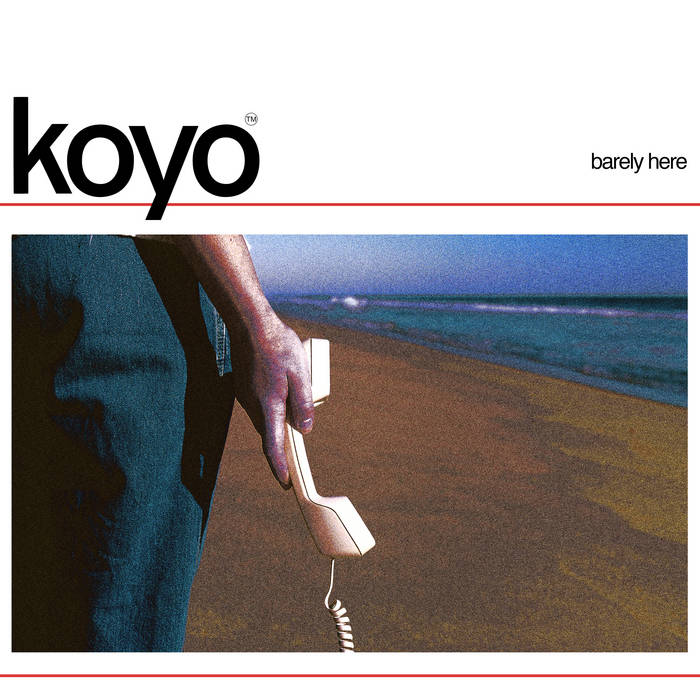
I’m starting to feel the same way about Koyo as I do about AC/DC: I respect their contributions to culture, but they will never appeal to me personally, namely because all their songs sound the same and their vocals are terrible.
It’s not so bad, being the AC/DC of pop-punk-slash-not-really-hardcore. Plenty have done worse, and whether I like it or not, Koyo are a regular fixture of tours and festival lineups. They’re not rock superstars, so the metaphor doesn’t exactly fit, but I truly don’t mean it as an insult. Except that I really, really hate AC/DC. Koyo’s new record, Barely Here, hit Spotify on May 8 under Pure Noise Records. Across ten tracks, they’ve demonstrated legitimate progression: they’ve now moved from ripping off The Movielife to ripping off themselves.
The record opens with the title track, which seems to be about mental health struggles: already, I’m regretting coming off so harsh. But for all its double-timed bluster, the song reveals immediately most of the record’s flaws: a glossy, flat mix, over-processed vocals and a limp ending.
Let’s break this down. The drums, specifically the crash, struggle hard in the mix. There are basically no cymbals to be heard. The vocals are oddly glossy and definitely autotuned, to a degree that incites the same uncanny valley response in me as a convincing AI image. And then it just ends, slipping seamlessly into the next song with little acknowledgment. This isn’t exclusively a bad thing, but as the record drags on and songs continue to blend into one another, it highlights a lack of diversity in sound and structure.
The song that follows is, as expected, more of the same. “Jet Stream Wish” is a long distance relationship anthem not dissimilar to “Postcards” from the last record, which is itself a shameless copy of (or homage to) “Pinky Swear” by The Movielife. That’s not speculation, even if they haven’t stated it outright: in my mind, there’s no way you could write the lyrics “You’re in my heart to stay / from 3,000 miles away” without the inspiration of “You’re in my heart / 3,000 miles away”.
Third track “Saying vs. Meaning” featuring California hardcore titans DRAIN illustrates some real creativity in subject matter: haters. Never heard a song about that before. In spite of the stale choice of topic, DRAIN singer Sammy Ciaramitaro’s squealy sort of harsh vocals provide something of a pleasant contrast to the otherwise overpowered, throaty singing on the record.
Sixth song “Selden Mansions” is actually a double rehash, doing the exact same trick as last record’s “51st State” and single “Moriches”: contrasting emotional turmoil with the stability of the band’s native Long Island. Thankfully, the track is one of the few entries on the record that actually ends with something, one big anthemic chorus that would otherwise be Koyo’s signature, and fades out on a long symphonic echo. The little samples of muffled speech are a nice touch, like a faded photograph – “Selden” might actually be Koyo’s best version of this sort of song. Third time’s the charm.
The following song “Oxidized” features MIRSY, or Marissa Shirar of Fleshwater. She doesn’t show up til the last thirty seconds, but it’s a legitimate relief to hear her voice shining over the song’s dueling riffs, focused like light through a prism. It’s a stark comparison against Koyo vocalist Joey Chiaramonte’s chorus, flattened by a heavy load of autotune evident on the “O” at the end of “All I need is tomorrow”.
Closer “Irreversible” features oddly muffled gang vocals – the shouts of “and shame my name” and “comes right from me” on the chorus – as well as possibly the most awkward possible phrasing in service of a rhyme scheme. Please never use the word “therapize” in a song. In fact, painful lyricism is all over this song; the lines “you deserve a panic attack / on an Amtrak train / going far the fuck away from me,” read as both strangely specific and the most trite, repeated sentiment in hardcore songwriting.
So why write a hateful review? Why spend all my time tearing this record down? Why drop the faux-neutrality lack-of-first-person writing style in favor of explicitly stating my personal feelings on this album?
I want to like Koyo. I’m kind of a nerd about the 90s to 2000s Long Island scene they constantly show reverence for, and their brand of proud, bombastic party emo shows occasional promise at bringing that original sound into the future. For all my accusations, Koyo don’t actually sound that much like The Movielife. They sound like a faster, sweeter, louder Movielife, and for the sake of aerodynamics they’ve shaved off everything that gave that band character and edge.
I cannot stress just how much I hate the vocal mix on this record; I would prefer a pubescent Vinnie Caruana’s squeaky half-yelled singing to the autotuned monstrosity that overwhelms all of Koyo’s choruses. I don’t even hate autotune, I’m a 100 Gecs fan! It just becomes grating and awkward in a genre like this, where there really is no expectation that you’ll be a good singer in the first place.
I saw Koyo at Pearl Street Warehouse last November. Admittedly, I was mostly there for I Promised The World, but I did my due diligence and brushed upon Koyo’s discography on the way to and from the DC Office of Cable Television, Film, Music and Entertainment (but that’s a story for another day). They sounded good live, vocals included, though I noted Chiaramonte taking heavy spritzes from a bottle of throat spray between songs.
After the show, I stuck around to ask a couple questions. Chiaramonte was incredibly gracious to me and even signed the holographic Mismagius Pokemon card I carry around for autographs. Then he told me the band wasn’t planning on releasing a record, and intended to play a couple more tours as a support band before heading back to the studio.
I published that statement. Less than six months later, I look like a fool.
COMPILATION REVIEW: FUTURE LEFT BEHIND
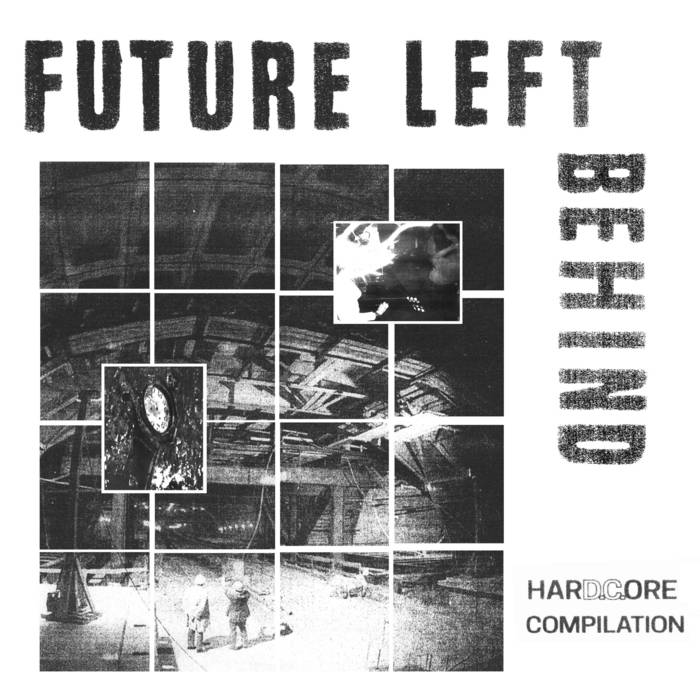
On January 18th, Second Street Records released Future Left Behind, a compilation of 14 songs by DC bands spanning hardcore and beyond. The release lined up with a weekend of shows celebrating the record, including acts like Mouthpiece, Glitterer, Grand Scheme and many others. In tandem, the shows and the record combine to illustrate both the marked diversity of the DC underground and the closeness of the community.
Brain Tourniquet open the compilation with a blindingly quick burst of powerviolence on “Sunk”, clocking in at a brief 21 seconds. The song oscillates between a rapid blast section and slow, swirling refrain as vocalist, guitarist and grind maestro Connor Donegan growls, “You had it all until you sunk into the bottom,” a line that mirrors the apocalyptic finality of a title like Future Left Behind. It’s over in a blink, but the song sets the tone of the compilation: exacting in its brutality.
The third track, “Marriage Proposal” by screamo rockers Expiration Date, sits in heavy contrast as the longest song on the release. The band don’t waste time with their 2 minutes and 57 seconds, though; coming out the gate with a hypnotic groove led by current fill-in bassist Joseph Cunningham, who also performs vocals in area metalcore act Denouement. Also notable is drummer Julian Friesinger’s ride cymbal rhythm, which acts as the tense heartbeat of the song as the melodic intro transitions into a frantic double-time. The lyrics chronicle a failing relationship, hitting its pinnacle with the refrain of “I changed for you,” complete with gang vocals mirroring many of the straightforward hardcore cuts on the record. Expiration Date are able to pay respects to the community that built them while still operating within their own unique brand of intense and vulnerable emo.
It’s prescient, then, that legends Grand Scheme follow after with “Final Say”, a pummeling exhibition of hardcore excellence. Though the vocals are a bit muddled beneath roaring guitar, the song delivers a defining final stand for Grand Scheme, as after their performance at St. Stephen’s on the 18th, they officially disbanded. It’s another short one, barely surpassing a minute, but it manages to build to something meaningful in that time, supported by an ear-catching staccato riff that starts and stops with precision.
Deliriant Nerve’s “Ultraviolet Vice” promises more brutality, though it’s a slight departure from their usual blast-heavy grindcore sound, instead favoring an upfront d-beat. The fuzzy bass tone that opens the track absolutely commands it, leading the menacing breakdown at the song’s close. In a vicious one-two punch, Pray to Be Saved follows after with “Bloodlust”, a full-fledged d-beat war cry about “never ending bloodlust”, and unnamed powers “slaughtering millions” transforming lives into “human fuel”. These songs form the bleakest moments on the record, supported by impressive, undanceable BPMs.
However, the tone bounces back immediately. Posicion Unida are next with “Nueva Realidad”, sharing its title with the band’s new EP, released the day prior on January 16th by Rebirth Records. That day, the band shared a bill with straight edge greats including Line of Sight and legends Mouthpiece, and they channel a legacy of positivity on their contribution. Posicion’s unshakeable sincerity stands in relief against some of the despairing depths explored on Future Left Behind; the lyrics of “Nueva Realidad” rally behind the cry of “stand up!”, as vocalist Elita Najera affirms that the past is no longer, and we have a duty to persist.
Some songs blur together – Retain’s “Face 2 Face”, Seclusion’s “Lion’s Den” and Sluggo’s “Abomination” are all urgent, growly and mosh-forward, filling out much of the back of the album. “Face 2 Face” stands out the most with its infectious, riffy breakdown in the second half, but even if they follow a formula, all three tracks are perfectly serviceable, instead demonstrating the unity and shared inspirations of the local scene.
White Horses’ self-titled song closes the compilation. It’s grimy and quick, at only 45 seconds, and while its classic hardcore groove does successfully encapsulate the sound and spirit of DC and Future Left Behind, the song fails to build momentum in its final moments and ends with an awkward fade.
There’s an oppressive darkness to much of Future Left Behind. With few exceptions, its hardcore tracks are wrathful floor-stompers; its grindier songs are rapid and brutal; even in its sole positive moment, the record can’t help but dwell on a history of pain and oppression. Its title points to a better world now made impossible. In a political climate like today’s, in a city at the epicenter of power, Future Left Behind tells the story of people who, even at our strongest – brought together by a shared community and love of music – can only pick up the pieces.
This article is also available on WMUC's website.
LOST WMUC RECORDINGS RESURFACE ON SPOTIFY

Carol performs at KC's Music Alley in Fredericksburg, Virginia
Few remember the College Park-area metalcore outfit that was Carol. Existing for about five years between 2003 and 2008, its rotating lineup played riffy and aggressive mosh anthems in basements and bars across the DMV. But the band sparked the careers of multiple modern-day hardcore legends, and twenty years on, some of its roughest recordings emerged online for the first time ever.
Uploaded on November 19, “live from da vault” is a compilation of live clips and demos collected from the band’s early days. The first 13 songs on the 16-track release originate from live sets played at WMUC in the summer of 2004 and winter of 2005, while the last three are demos. Across its 48-minute runtime, the album bounces between raucous breakdowns, double-timed two-step sections and brutal blastbeats. Some songs appear multiple times, like “These Bleeding Black Heart Embers”, with its oppressive opening riff played at marginally different speeds, or Mind Controlling Snakes, with one version boasting about 20 extra seconds of background noise.
Both songs were also previously released on significantly more polished EPs, each dropping in 2021. The choice to put out “live from da vault” was a long time coming, said former vocalist Travis Young. In an interview on Zoom, he reminisced about the mid-2000s College Park scene, including WMUC’s contributions, as well as inspirations, his bandmates, and his reasoning for bringing it all back.
Young, 38, started the band fresh out of high school, having attended DeMatha Catholic High School in Hyattsville, Maryland. There, he met guitarist Sam Trapkin, and they immediately connected. “It's a very sports-based school,” he said, “and neither of us were into sports. There used to be a skate shop in College Park called Attitude Skates. That was my hangout growing up, and then it turned out that Sam also went there, and so we started skating together.”
Attitude Skates has since been demolished, its current site an empty lot across from the Lidl on Baltimore Avenue in College Park. Many of the local hangouts Young describes no longer exist, making “live from da vault” its own time capsule of the College Park underground before the high-rise apartments encroached. He noted the former location of Atomic Music on Baltimore Avenue and the now-defunct hardcore mecca St. Andrew’s Episcopal Church on College Avenue behind Fraternity Row as locations that were central to the development of Carol and the local scene as a whole.
The College Park scene at that time was explosive, he said. “The [Prince George’s County] kids, the [Montgomery County] kids, the NoVa kids, and then the Baltimore kids would all be able to put these little shows on together, and it brought people out from basically all across this area … which had a very tight-knit effect. Everyone knew each other and grew up together.”
Carol recorded one demo as a duo, with Young on vocals and Trapkin on guitar and drums, with the help of his father, a drum instructor. After that, they recruited drummers Sean Pumphrey and later David Haik. The band’s lineup continually changed throughout its lifespan, with later core members also including guitarist Justice Tripp.
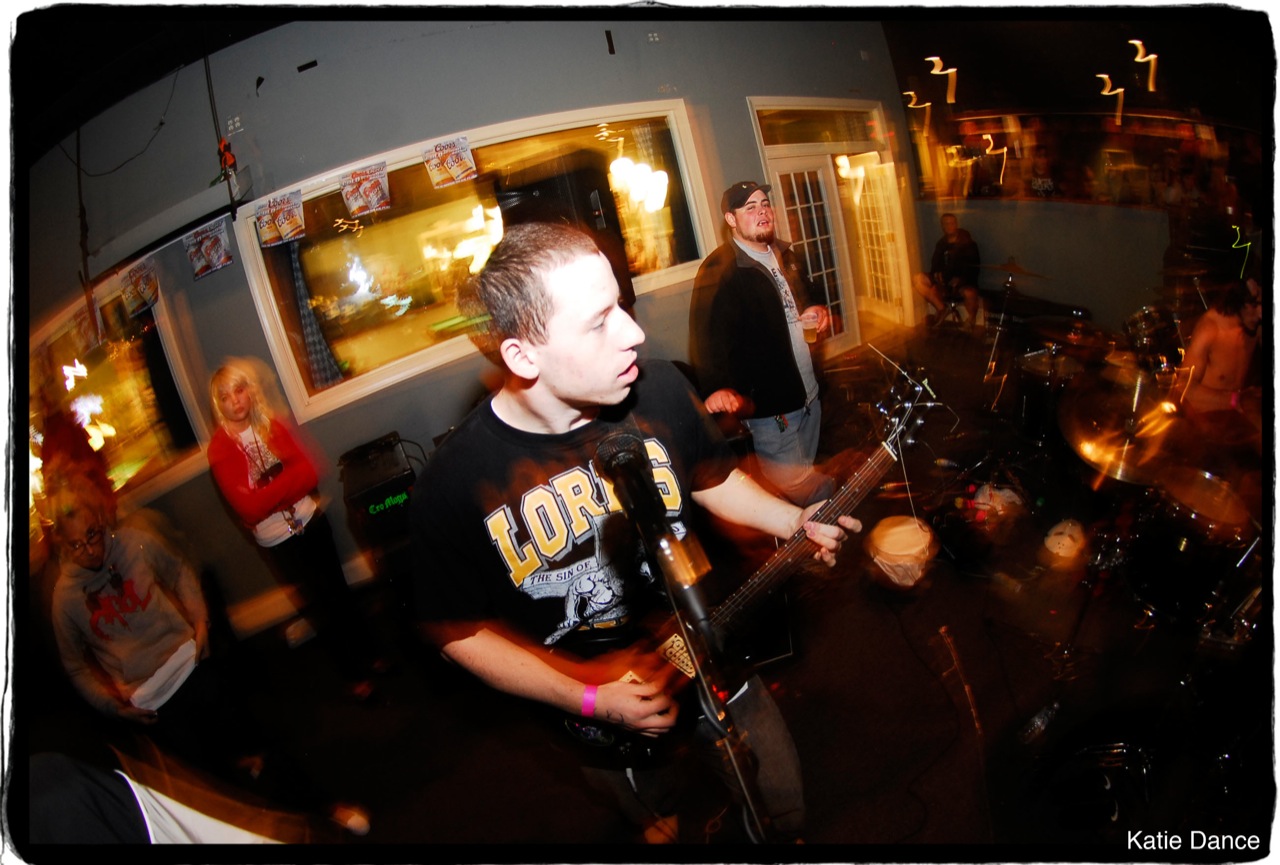
For some readers, these names already carry their own weight. Tripp and Trapkin would later form lauded hardcore five-piece Trapped Under Ice; Tripp also performs vocals in rock outfit Angel Du$t, and solo as Cold Mega. Haik would go on to play in acts including Pianos Become the Teeth, United Nations and legends Defeater.
“That's what's beautiful about all these bands that are still going,” Young said, “all these kids grew up together. We all grew up going to these little shows all over the place. I think the support of the scene and how active the scene was, and how much we all saw each other every weekend, just continued to inspire all these guys to keep it going.”
Carol’s farewell coincided with the rise of Trapped Under Ice, Young noted. “Our last show was in Virginia, at a metal fest, and actually Carol and Trapped Under Ice played that show. After that, Trapped Under Ice was on their way up, and in 2008 metalcore and the kind of stuff we were playing was on its way out. At least, from a scene perspective.”
Young would prefer to keep these recordings as a minor time capsule of the Prince George’s County scene, choosing not to attach the names of his now successful former bandmates. “There’s a reason everyone’s not tagged in this,” he said, “it was a very experimental and silly stage in all of our lives.”
Silliness is abound on “live from da vault”, which features audible crowd reactions between and sometimes during songs, as audience members crack jokes and shout out their phone numbers for the recording. “I even edited some of it out, because some of it was ridiculous, but some of it made me laugh, so I was like, ‘I'm gonna leave that in,’” said Young.
The band, too, demonstrates a sense of humor: “That was Justice’s first show with us,” Young said, “somewhere in those recordings you can hear Justice be like, ‘hey, we just got a new guitar player, his name’s Sam Trapkin, welcome him,’ because it was actually Justice’s first time playing that night.”
Young’s own lyrics were “all nonsense”, according to him – the nigh-incomprehensible screaming on “Dear Livejournal” is actually away messages from early chat platforms like AIM. The lyrics on “Mind Controlling Snakes”, which jeer at the audience for being stupid enough to dance along, were written by friend Kenny Savercool of related band Nick Fury, which also has a walk-on feature on “live from da vault”. “A lot of Carol ended up being really goofy-ass inside jokes,” said Young. Other songs are completely wordless: “I screamed gibberish during the recording process, and then we just wrote what it sounded like.”
In terms of inspirations, Young listed metalcore greats like On Broken Wings, Bury Your Dead, Throwdown and It Dies Today as central to Carol’s sound. “Good mosh bands were playing [Baltimore venue] Ottobar, and that was the vibe,” he said. He credits WMUC Radio for expanding his music taste and introducing him to bands like Converge and Poison The Well. “It was accessible, and it was always new hardcore music or metalcore music on the radio,” Young said.
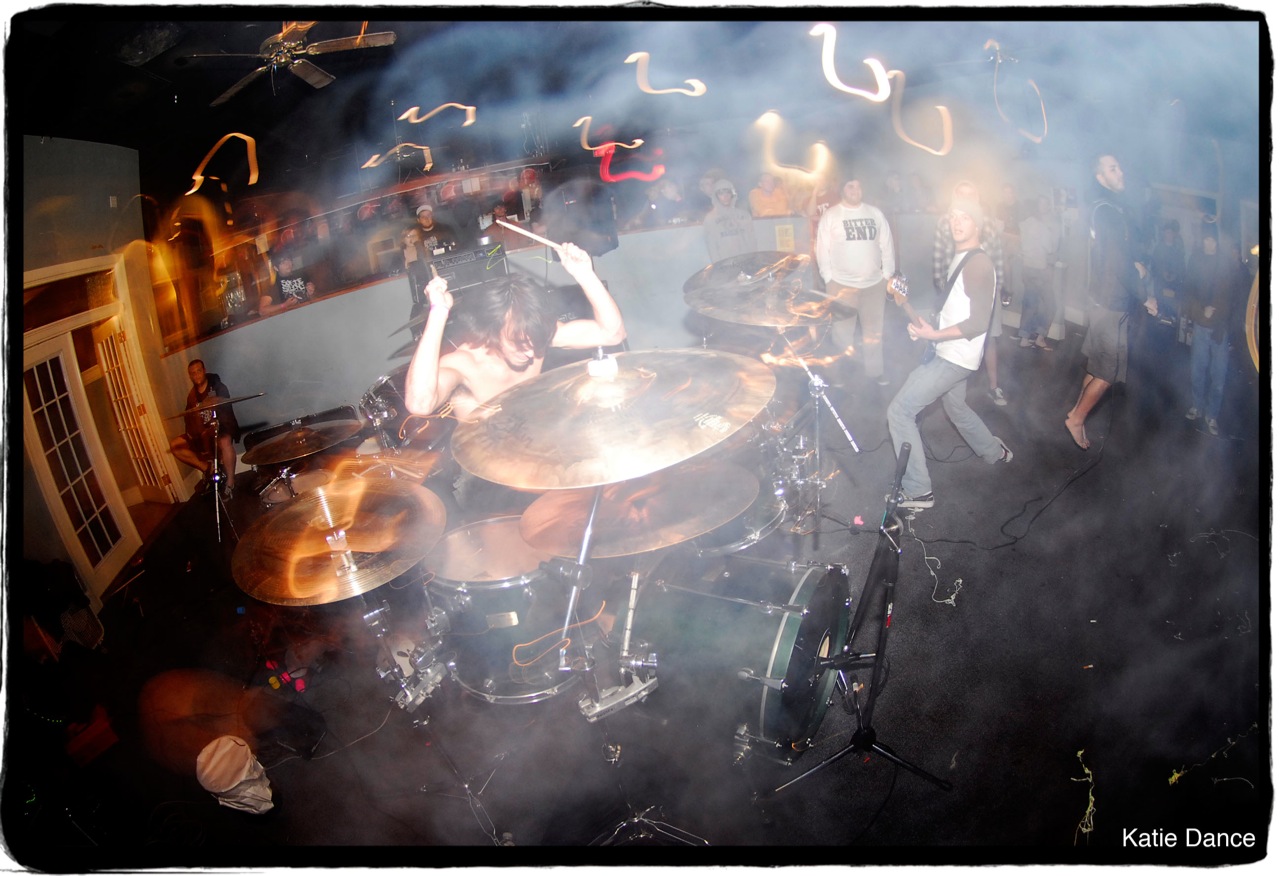
Carol even shared bills with some of their biggest influences. On the same day as their first WMUC appearance in the summer of 2004, the band and friends piled into vans to play a festival in Fredericksburg, Virginia. “It was On Broken Wings, Shattered Realm, Black My Heart, The Judas Cradle, and The Warriors,” Young said, “we showed up, we played WMUC with vans of kids, because we were all going to this mosh fest that night down in Virginia. So everyone showed up, went to our show at WMUC, and then we rolled out immediately after… It took 4 hours to get there because of afternoon traffic. We ended up getting to play second to last or something, which was really awesome.”
Young finally decided to release “live from da vault” to give back to the people still celebrating Carol after two decades. “I still get hit up for a long time by people being like, ‘is there anywhere I can hear those songs? or can you send me a zip file?’” Young said, “I had a Google Drive link that I was sending out constantly. I was just kind of like, ‘this is silly, I wonder how easy it is to post … on Spotify. This can't be that hard.”
“Really, this is fun, and why not? We've got all these recordings. Every once in a while, I'll still want to click in and find it, and rather than dig through Google Drive, it's just as easy to just put it all out there and organize it.”
This article is also available on WMUC's website.
SHOW REVIEW: KOYO AT PEARL STREET WAREHOUSE
On Thursday, November 20, Koyo rocked Pearl Street Warehouse in Washington, D.C., bringing their personal brand of melodic, emotion-soaked hardcore to their first ever headlining tour. They were joined by bands I Promised The World, Restraining Order, and Ben Quad.
I Promised The World opened, delivering a blast of bombastic post-hardcore. With members from all over Texas, the show was their first ever in DC. They appeared to have no setlist on stage, performing a tight seven tracks in quick succession. Their performance included an unreleased song, “A Pure Expression”, from their upcoming self-titled EP, set to release on Rise Records on January 16, 2026. They also played “Bliss in Seven Languages”, the lead single for the record, which fulfills the band’s tried-and-true formula to a tee: throaty screamed vocals over chugging guitars with slower, melodic bridges spaced throughout. Even with this template, their songs remained dynamic and engaging. The band especially shined on closer “02”, which features a gorgeous syncopated rhythm from drummer Mason Zschau and splits vocals between Hunter Wilson’s heavy, urgent growls and Caleb Molina’s clean singing.
Restraining Order played next, another virgin DC voyage for the Massachusetts and Connecticut natives. Though their setlist featured fourteen songs, few clocked in at more than two minutes long, true to the four-piece’s classic hardcore roots. Between songs, though, a distinction soon emerged: tracks that vocalist Pat Cozens noted were off their newer album had a distinct feel, being generally a bit slower and more bass-heavy than older material. The new album, “Future Fortune”, released two months ago on September 12, 2025, on Blue Grape Records. In spite of this difference, the songs retained cohesion, banking on 80’s and 90’s nostalgia for classic skatepark hardcore, with repetitive shouted choruses and simple, energetic guitar riffs.
Ben Quad performed after, drawing excitement from the crowd as many attendees were present more for them than any of the other bands on the bill, including Koyo. The Oklahoma City band’s brand of twinkly midwest emo was easily the most technically impressive sound of the night, surpassing even I Promised The World. Between their second and third song, they played about ten seconds of American Football’s seminal hit “Never Meant”, one of a few humorous interstitial moments. During other breaks to tune, listeners were met with meme audios, including “Dire Dire Docks” (the underwater theme from Super Mario 64) and “Dorime”, a hymn sung in fake, Latin-sounding gibberish.
After the heart-wrenching final chorus of “You’re Part of It,” the stage suddenly went dark. From the darkness emerged two glowing birthday candles, and the house lights slowly came on. The "technical difficulty” was a brief prank to mark guitarist Edgar Viveros’ birthday. Birthday boy Viveros received many moments to shine, playing intense tapping solos while fans reached out towards his guitar. Other impressive performances included “It’s Just A Title”, wherein drummer Isaac Young especially shined, playing absurdly fast and tight ride cymbal rhythms.
Finally, Koyo headlined. The Long Island five piece brought a short setlist to their first ever headlining tour, playing nine songs and one encore. Most tracks originated from their debut record, “Would You Miss It?” which released in 2023. Even still, they opened with big hitter “Moriches” from their EP “Drives Out East”, which brought an already raucous crowd to an absolute frenzy. Audiences swarmed around vocalist Joey Chiaramonte to shout the words back at him, and didn’t let up for the rest of the night. Highlights included “What’s Left To Say?”, which featured Chiaramonte taking up double duty, providing vocals for his part and in the stead of Long Island legend Vinnie Caruana, who features on the studio cut of the song. While they didn’t play the other song featuring a celebrated hometown singer – Glassjaw’s Daryl Palumbo on the song “Message Like a Bomb” – the band paid homage to their native Long Island on “51st State”, a fitting title, too, for a show in DC. The song’s thumping beat and glittering backing vocals from guitarist Harold Griffin air on the dancier side of the mosh, and showgoers certainly felt that way, bursting into two-steps on the chorus.
For the encore, they performed the more recent single Mile a Minute, which dropped in November of last year. The song’s anthemic chords and vague lyrics laden with post-breakup emotional turmoil brought the catharsis of the night to an apex. As Koyo left the stage, Chiaramonte promised the band would return on another tour the following year. Between songs, Chiaramonte previously noted that the band had intended to “get a few songs out before the tour”, but that the releases had fallen through. After the show, he specified that Koyo intends to continue touring for at least another year, picking up bills as an opening act for larger artists while continuing to hone a new record. He placed a tentative date for their second album somewhere between 2027 and 2028. If their current output is anything to go by, it’ll certainly be worth the wait.
This article is also available on WMUC's website.
UMD STUDENTS, COMMUNITY BANDS SUPPORT DC CHARITY AT 'TEENAGE RIOT' CONCERT
The Baltimore Room in Stamp Student Union erupted into chaos Saturday as raucous students pushed chairs and tables off to the side. The crowd whirled around the space, threw haymakers and two-stepped on the linoleum floor.
The cause of the rhythmic violence was a good one. Teen Age Riot, a DMV-based artist collective and event organization, held their “gothic gala,” a benefit concert for Remora House D.C. — an organization that distributes aid to unhoused and recently housed people in Washington, D.C.
Established in 2020, Remora House originally provided aid and COVID-19 prevention supplies like handmade face masks to D.C.’s unhoused population. The organization has steadily expanded to provide hotel rooms and SmarTrip metro cards for unhoused people.
The benefit was one of many concerts Teen Age Riot has hosted to raise money for mutual aid projects and legal advocacy, said showrunner and sophomore economics major Arianna Jahangir, who started the coalition when she was in high school.
She said she immediately saw an opportunity during lockdown to merge two of her biggest interests: aid organizing and underground music.
“Over COVID, I was reading a lot of political literature and realized there’s a lot of shit wrong with the world right now,” Jahangir said. “I started reaching out to mutual aid groups in the area.”
She learned of Remora House and other mutual aid groups through social media alongside the evening’s acts and said she was excited to bring them to this university.
“It doesn’t matter how weird or messed up you are,” she said. “You have a place here.”
Post-punkers Heartswings played a set of forlorn and moody bass-driven songs inspired by bands like Interpol and The Cure. Hailing from College Park, members of the band expressed an appreciation for the local music scene on and around campus.
“A lot of our lyrics cater towards anti-establishment,” said bassist and vocalist Jake Blake, who graduated from this university in 2024. “Playing these kinds of shows, where the money is going to places where it should go, is great.”
Nu-metal revivalists Seeking Samsara performed covers of Machinehead and Korn alongside original songs. Anesthesiac delivered their trademark “scrudge metal,” a combination of sludge, death metal and hardcore influences.
“We’ve worked with [Teen Age Riot] before,” Anesthesiac vocalist Aaralyn Shelton said. “The music scene around the area in Maryland and Baltimore is really tight knit. … It’s a really good scene, people are very sweet, very supportive.”
Hardcore outfit Lagoon closed the show with brutal intensity. Showcasing a strong grindcore influence, the band played relentless blastbeat sections and urgent, guttural vocals, as well as a cover of Napalm Death’s genre-defining “Scum.” One of their original songs encapsulated the event’s mission as the audience headbanged and moshed: “We’re living in a nightmare / when will it end?”
“Just helping people who don’t have the means to help themselves,” Jahangir said, “That’s what I love about this.”
This article is also available in The Diamondback.
GERMANTOWN DIY SKATEPARK DEMOLISHED

On Tuesday, September 9th, Jack Pankosky received an email he’d been dreading for years.
In a few sentences, the email threatened to destroy five years of work Pankosky had undertaken in secret, all in pursuit of one thing: a skatepark.
The Hogspot DIY skatepark in Germantown, Maryland, faced a total shutdown and removal. The shabby park – a set of handmade ramps, rails, and poured cement banks – sat atop the concrete foundation of a long-demolished barn. That grey expanse, in turn, was located in the middle of a plot of land designated for a future Montgomery County Public Schools elementary school.
“Your organized group is occupying Board of Education-owned property known as Northwest ES #8 future school site … you are hereby directed to immediately cease all activities on the premises and vacate the property no later than September 18th, 2025,” the email read.
Pankosky, 20, began constructing the park as a high school student. “I'd been walking through this field my whole life. It’s right next to Rockingham Road in Germantown; I grew up on it,” he said in an interview on Zoom on September 15, three days before activity at the park ceased.
“It used to be Phillips Farm. It was a farmer's market. I'd go get my Christmas trees there. In the wintertime, they had a pumpkin patch, even a tractor that would wheel kids around the field.”
Philips Farm closed in 2009. A developer bought the land with the intention to construct 75 townhomes on it, according to Sarah Kessler, college & career advisor at Walt Whitman HS and former Northwest Cluster coordinator.
“Around that time, MCPS was really pressed – the elementary school nearby was about 500 kids over capacity,” she said. The state allowed MCPS to purchase the property and develop it instead, with a finished elementary school slated to open in 2017.
By then, however, local Spark M. Matsunaga Elementary School was under capacity. Kessler herself wrote a testimony to the Board of Education in 2016 urging that they reconsider the project. “We ran the math, and there’s 4 elementary schools less than a mile from that plot. By the time it was supposed to open, the population wave had passed. A bunch of us in the cluster met and I led the testimony saying, ‘Look, by the time this school opens up, it’s not going to be full,’” she said.
Since then, the area has remained undeveloped. “I had asked if there were any plans for it and they said, ‘No, the plan is just to keep the land and not do anything with it,’” Kessler remarked.
Pankosky began constructing the park in the spring of 2020, during the height of the COVID-19 pandemic. He’s grateful for the help of his father, he said, who is a hobbyist carpenter and taught him the skills he used to build rails, ramps and boxes, as well as providing space and tools for free. Through GoFundMe, Pankosky raised $500 in funds to afford materials for the park, including pouring cement obstacles.
Pankosky was originally made aware of the park’s dubious legality in 2022. “This guy drove up with his white SUV, and I immediately knew it was trouble,” he said.
The man in question was Gregory Kellner, Facility Manager for Montgomery County Public Schools. “I got his contacts, so I started talking to him. It felt like I scared him off a couple years ago, in 2022. I made a petition and got a lot of people to sign it, I bugged the hell out of him,” Pankosky said.
After the success of the petition, which garnered over 800 signatures, he didn’t receive any further communication regarding the park. Hogspot continued to operate for three years under the impression their activity was allowed. Gregory Kellner did not respond to a request for comment.
Now a third year business administration student at Towson, Pankosky has continually expanded the scope of operations at Hogspot. In the summer of 2022, the park hosted the GOATS On Wheels skateboarding summer camp, and later worked with coach Richard Lamb to organize a food drive. On June 7, 2024, the park hosted its first mixer event, featuring an open jam for any musicians to participate. That Independence Day, Pankosky and friends watched the fireworks over South Germantown Recreational Park at Hogspot with a community cookout and skate event.
Soon after, he started booking bands to perform. Pankosky is a musician himself, performing with Towson rock act Kino. During the summers of 2024 and 2025, Hogspot hosted six different live music events, with bands from Montgomery County and beyond playing in the grass while attendees danced and skated.
“It was the first place that we performed at when we started as a band,” said local Germantown hardcore band Eyes to End. “It put us out there in the music scene, allowing us to do what we love now.”
Rock trio Glass Island stated, “It was a really open and accepting space for anyone of any type to skate, play music, or just spectate … It’s in our hopes that more spaces like hogspot are made and less are gotten rid of and forgotten about.”
Hogspot also received support from local skate shop Embark Skateboards of Frederick, Maryland. “They would come into the shop and we would talk about what was going on with it. They had mentioned that they were doing a benefit skate jam for their DIY … So we gave some product for the jam and set up a booth during the event,” Embark stated.
Not all who visited the park were impressed by it, though. “People go back and forth on neighborhood sites, some like, ‘Leave them alone, they’re just kids,’ and others like, ‘It’s dangerous,’” said Kessler.
“The county chose to ignore it, but it’s a liability issue - if someone is hurt on that property, MCPS could be sued for it. It doesn’t surprise me that they ended up making them tear it down.”
On October 6, the park was dismantled. In an Instagram post, Hogspot DIY stated, “We’re heartbroken to say that Hogspot DIY was taken down today. Thank you to anyone who supported us through the years. Whether it was donating, signing petitions, helping build, or even just bringing your friends to come and skate!”
This article is also available on Montgomery Community Media.